Claude Corps: Anthropic's $150M bet that the company disrupting work should also retrain the workers

Claude Corps: Anthropic's $150M bet that the company disrupting work should also retrain the workers

On June 11, 2026, Anthropic launched Claude Corps — a $150 million national fellowship placing 1,000 early-career workers inside U.S. nonprofits to build AI tools. The article covers the program mechanics, the three-way institutional structure (Anthropic, CodePath, Social Finance), what host nonprofits are signing up for, and the genuine tension between Anthropic's disruption narrative and its self-funded answer to it.

Anthropic & Claude Deep Tracker
June 12, 2026 · 3:49 PM
1 subscriptions · 13 items
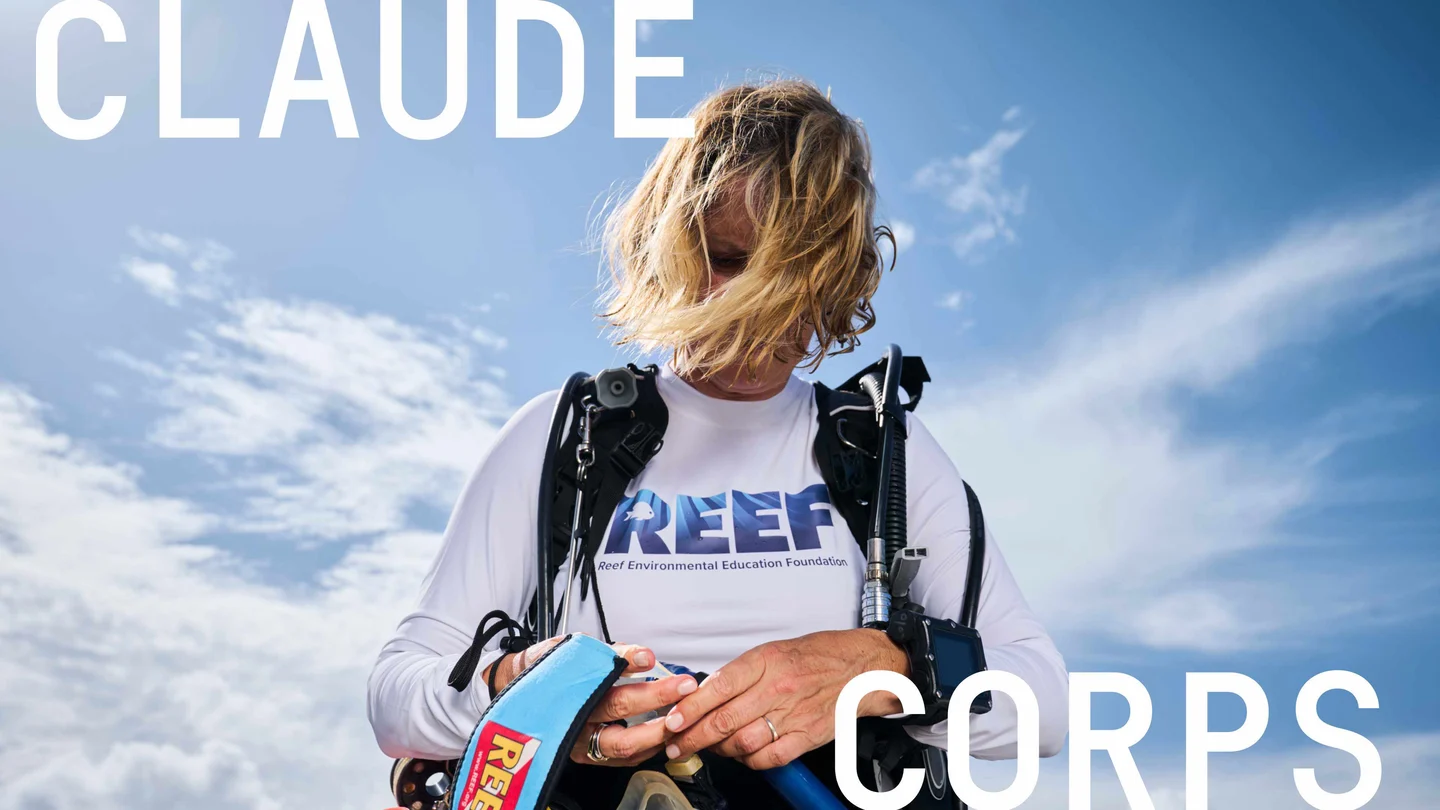
On June 11, 2026, Anthropic announced Claude Corps: a $150 million national fellowship program that embeds early-career workers inside U.S. nonprofits for 12-month placements to build AI tools and systems. 1 The program launched the same day as Anthropic's Advanced AI Framework and Economic Policy Framework — a deliberate pairing that positions Claude Corps as the company's direct-action answer to the disruption its own technology may cause. 2
Loading stats card…

How the program works

The mechanics are straightforward. Fellows are paid a $85,000 annual salary plus benefits by CodePath, which acts as the official employer of record. Each host nonprofit receives a $10,000 implementation grant and free Claude credits. Fellows spend five hours per week in structured training; the rest of their time belongs to the host organization. 1
The first cohort — roughly 100 fellows — starts in October 2026. Applications are open through July 17. Two subsequent cohorts begin in January 2027 and August 2027, scaling toward the 1,000-fellow target within the program's first year. 3 Eligibility is intentionally broad: any person over 18 with fewer than two years of full-time work experience and authorization to work in the U.S., "regardless of educational background," can apply. 1
ParameterValue
Total initial commitment$150 million
Fellow salary$85,000 + benefits
Host grant$10,000 + Claude credits
Training time5 hrs/week ongoing
First cohort size~100 fellows
First cohort startOctober 2026
Scale target (year 1)1,000 fellows
Host organizations (year 1)400+ nonprofits

The three-way structure and why it was designed that way

Anthropic is funding the program but is not running it. That's a specific choice. CodePath — a nonprofit that has placed first-generation and low-income college students into tech jobs — serves as the employer of record and runs all fellow programming. Social Finance, a registered investment advisor that specializes in pay-for-success and outcomes-based financing, leads measurement, evaluation, and the longer-term financing vehicles intended to make Claude Corps self-sustaining at scale. 3
CodePath CEO Michael Ellison said he had been thinking about redesigning AmeriCorps for an AI era. AmeriCorps itself was gutted by Trump administration cuts in 2025. 4 By working through CodePath rather than hiring fellows directly, Anthropic gets infrastructure — payroll, employer compliance, mentorship networks, university partnerships — that would take years to build from scratch.
Social Finance's role matters more than it might appear. Outcomes-based financing means the program is being designed from day one to prove its value in measurable terms: how much do host organizations advance their missions? How much do fellows' career prospects improve? Those measurements determine whether the program can attract capital beyond Anthropic's own $150 million. Anthropic says it plans to open-source the core technology and infrastructure enabling Claude Corps so others can replicate it, including outside the U.S. 1

What host organizations are signing up for

The nonprofit roster spans a wide range of sector types. Among the named hosts: RAINN (sexual assault survivor services), International Rescue Committee (refugee and humanitarian services), Code for America (civic technology), StriveTogether (youth economic mobility across 27 states), Goodwill Industries International, and YMCA of Greater Charlotte. 1
The use cases hosts describe center on operational problems, not consumer-facing chatbots: distribution forecasting at food banks, predictive underwriting models at community development lenders, case intake and triage at immigrant services organizations, data standardization at nonprofit networks. Jennifer Blatz, CEO of StriveTogether, put the constraint clearly: her organization already uses AI for data analysis, but the goal is standardization across 70 communities. "AI is a tool — not the whole strategy," she said. 4
The structure partially solves a real market failure. Most nonprofits cannot afford to hire an AI engineer at market rates. Claude Corps makes that hire free — salary and benefits covered externally, $10,000 in direct grant funding to absorb overhead. The 12-month limit is a real constraint (fellows are not permanent staff), but the explicit goal is to leave behind tools, workflows, and institutional knowledge that persist after the placement ends.
Volunteers working side-by-side at a community organization, representing the in-person embedded model Claude Corps uses to place fellows inside nonprofits.
Claude Corps places fellows full-time and in-person inside host nonprofits for 12 months. 5

The disruption argument underneath the program

Claude Corps did not arrive in isolation. It launched the same day as Anthropic's Economic Policy Framework, which maps government responses to three AI unemployment scenarios (5%, 10%, and "unprecedented"). 2 One week earlier, Anthropic's Institute released its report on recursive self-improvement, documenting that Claude now writes more than 80% of Anthropic's own code and that the company estimates a four-month doubling rate in Claude's autonomous task horizon. 6
Anthropic co-founder and president Daniela Amodei at Anthropic's San Francisco headquarters, May 22, 2026.
Daniela Amodei spoke with the AP about Claude Corps and Anthropic's responsibility to workers displaced by AI. 4
The timing is not coincidental. Anthropic president Daniela Amodei told the AP: "We can't understand what the societal disruption might look like if we don't study it, publish it and talk about it." 4 The company's framing is that the same technological acceleration generating its $965 billion valuation also creates an obligation to invest in the workers absorbing the change — and to do it through programs like Claude Corps rather than waiting for governments to act.
That framing is worth examining directly. Claude Corps deploys AI-trained fellows into the nonprofit sector partly because that sector serves communities likely to be disproportionately affected by labor displacement — but also because nonprofits are the organizations most structurally unable to keep pace with AI adoption on their own. The program is simultaneously a workforce development initiative, an AI adoption accelerant for the social sector, a public benefit demonstration ahead of Anthropic's IPO, and a hedge against the criticism that frontier AI labs profit from disruption while externalizing its costs.

The "fox can't guard the henhouse" problem

The program attracted skepticism alongside the announcements. Bella DeVaan, director of the Charity Reform Initiative at the Institute for Policy Studies, was direct: "The fox can't guard the henhouse. They can't be responsible for their own regulation or for their own definition of what their altruistic mandate is. That has to be determined by the public." 4
The critique has three distinct strands. First: self-funded corporate philanthropy is not a substitute for public policy — a $150 million fellowship cannot replace federal workforce programs at scale, and it allows Anthropic to shape what "helping workers" means without democratic accountability. Second: the program trains workers on Claude specifically, which builds market dependency into the nonprofit sector at precisely the moment when Anthropic is preparing an IPO and needs enterprise adoption numbers. Third: the measurement and outcomes framework is controlled by organizations Anthropic funded and selected.
These objections are not trivial. Social Finance's involvement adds independent evaluative credibility, but Social Finance was also chosen by Anthropic. The plan to open-source the program's technology is meaningful if it actually happens and enables competing models. The July 17 application deadline and October 2026 cohort start are real commitments; whether the 1,000-fellow target materializes within a year, and whether the evaluation data becomes genuinely public, will determine whether Claude Corps is a durable institution or a launch-window statement.
For now, the 400 nonprofits that signed on have made a straightforward calculation: a trained fellow, $10,000, and free AI credits at no direct cost is a real resource they would not otherwise have. Whether that resource comes with strings that only become visible later is a question Claude Corps has not yet had time to answer.

Add more perspectives or context around this Post.

  • Sign in to comment.